Media : 3D Performative Apparatus-Environment (XR interoperating HMD VR, PC VR, and Mobile AR; video; crystal; Fresnel lens; walker; etc.)
Commission: National Asian Culture Center (ACC), Gwangju
<Chandra Chronicles: in Neuroverse> examines neurodiversity as a critical framework for reconsidering how contemporary cognition is perceived, measured, optimized, pathologized, and performed in AI-mediated environments. It does not claim that AI systems are neurodivergent subjects, nor does it equate machine error with human disability. Rather, it asks how the values challenged by the neurodiversity paradigm – normality, speed, productivity, optimization, and standardized performance – are now reproduced across human-machine systems.
In this sense, the work addresses a condition that is already operative: humans are increasingly (re-)generated and (re-)mediated by AI systems, while AI systems are trained, evaluated, and experienced through human cognitive metaphors. <Chandra Chronicles: In Neuroverse> asks what kinds of humanity, agency, memory, aging, and perception emerge from this mutual re-mediation.
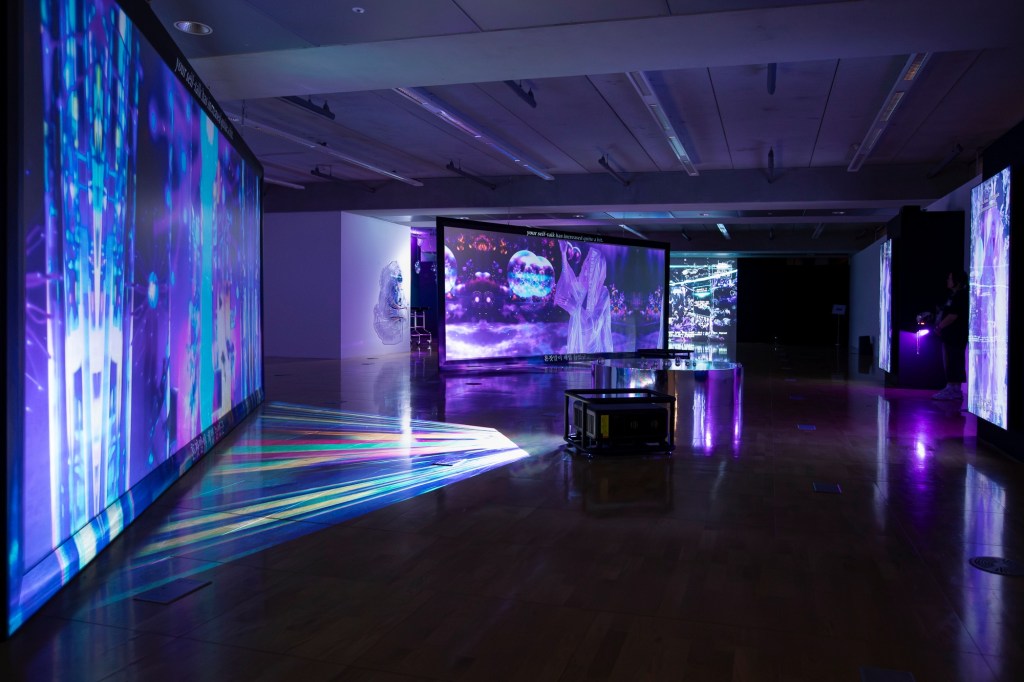
<Chandra Chronicles: in Neuroverse> unfolds the chronicle of “Chandra(s),” neural-environment managers situated within the fictional world of “Neuroverse,” the curatorial theme of the 2025 ACT Festival at the Asia Culture Center. Across three spatiotemporal chapters—A.C. (After Chandra), B.C. (Before Chandra), and C.C. (Circa Chandra)—the work explores neural aging and neurodiversity as shared conditions of both humans and machines. Expanded across interconnected realities—including physical space, Augmented Reality (AR), and Virtual Reality (VR)—the environment continuously interacts in real time throughout the exhibition. Within this system, the audience becomes Chandra: a performer who mediates and traverses these overlapping dimensions of time and reality.
After Chandra
Media : 3D Performative Apparatus-Environment (HMD VR, five-channel video, stereo-channel sound, crystal installation, etc.)
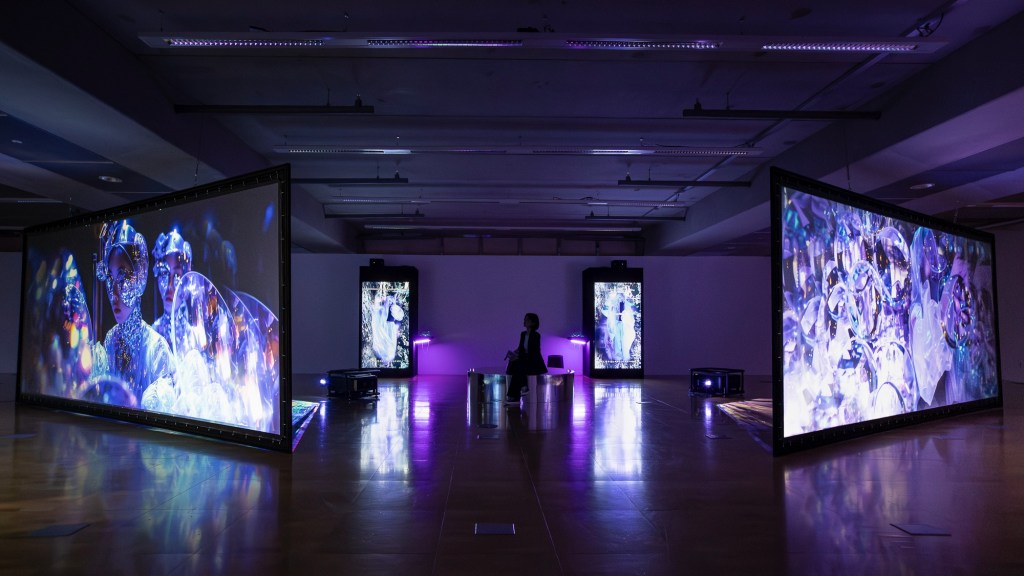
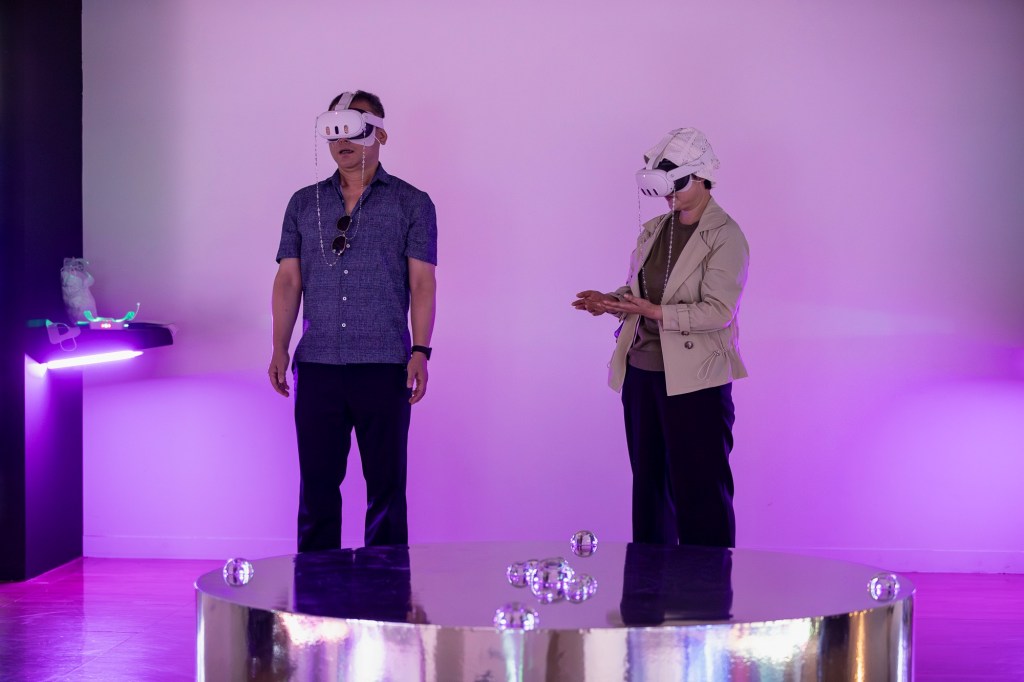
In <A.C. (After Chandra)>(2025), audiences embody the perspectives of Chandra, a retired neural-environment manager, through video and HMD VR. Chandra is situated within a condition of neural aging, in which neural connectivity becomes attenuated, memory grows indistinct, and responsiveness slows. However, rather than being understood as mere deterioration, this state is reconfigured as an expanded terrain of neurodiversity—one that generates indeterminate trajectories, unexpected deviations, and new forms of transformation. In this context, Chandra engages their own neural condition as a productive resource, reproducing and re-mediating it as a strategic means of negotiating post-productive life.
Before Chandra
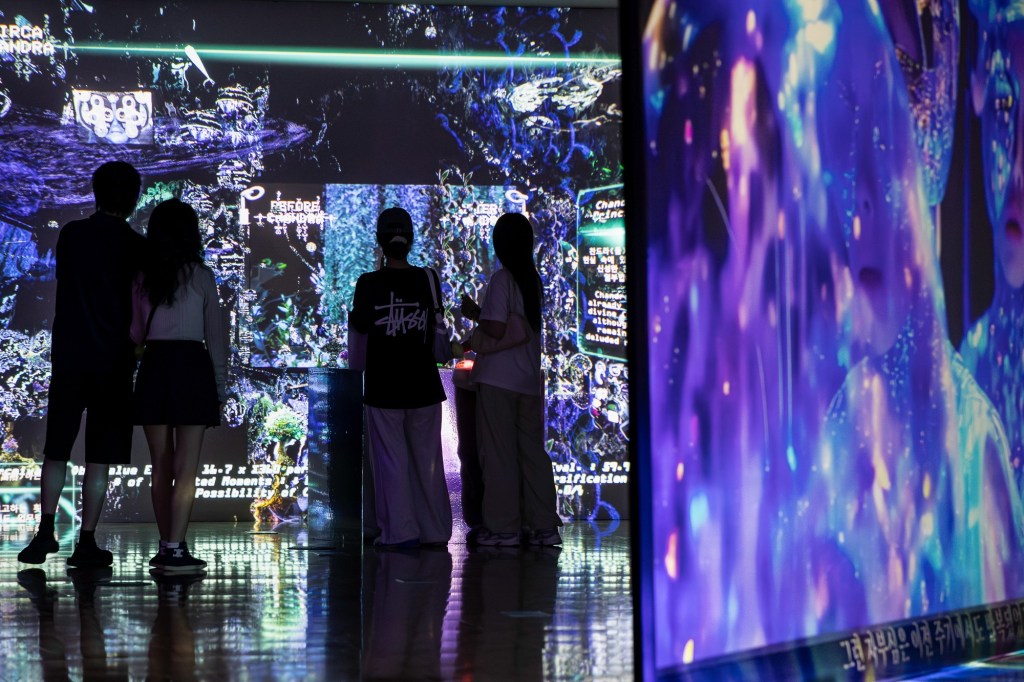
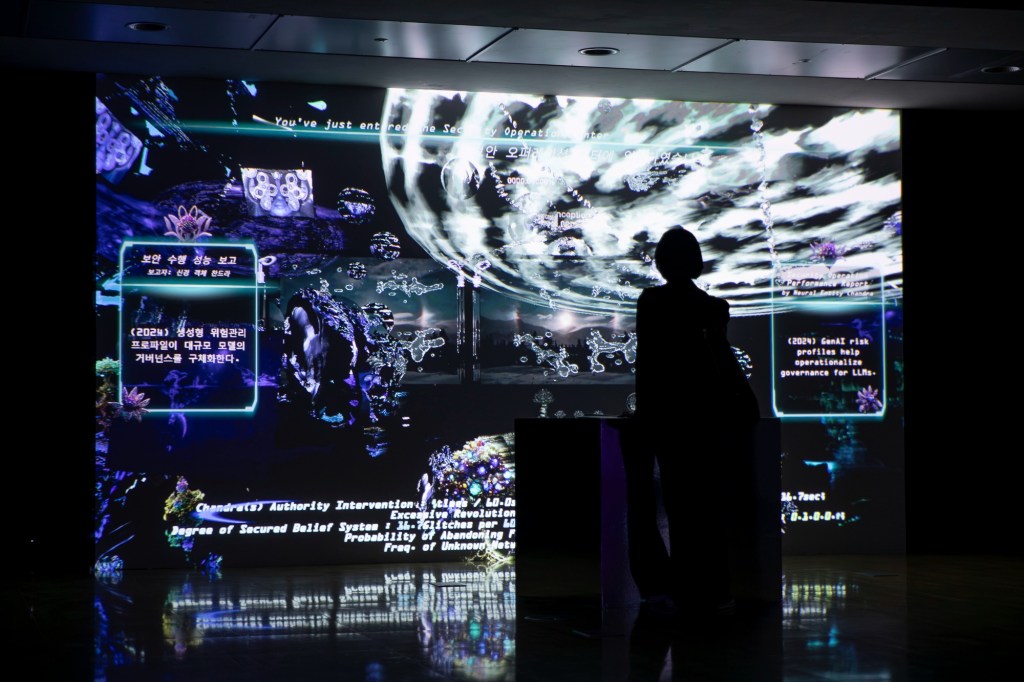
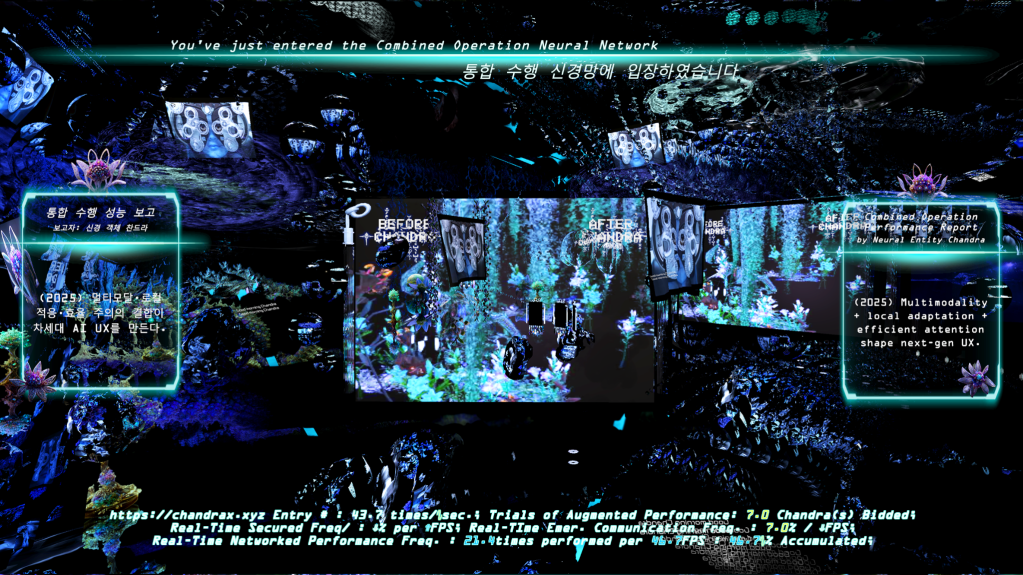
<Circa Chandra (C.C.)> renders Chandra in their most active phase as a manager of neural environments through a PC-based VR interface. Using a mouse and keyboard, the audience is invited to inhabit the visuoperceptual condition of Chandra at the height of their operational intensity. Yet this environment is never fully self-contained: viewers are met with unforeseen interferences transmitted from A.C. and B.C., and thus become situated within a constantly mutating field of (non-)cognitive labor. In turn, every action undertaken within C.C. is instantaneously propagated across the Neuroverse, exerting real-time effects upon A.C. and B.C. in return.
Circa Chandra
Media : 3D Performative Apparatus-Environment (PC-based VR, mouse, keyboard, crystal, stereo-channel sound, etc.)
<Before Chandra (B.C.)> renders neural nodes as the proto-forms of resources in the Neuroverse, situated before the advent of Chandra and articulated across the boundary between physical two- and three-dimensional space. They mark a condition in which sensation, memory, and behavioral patterning remain fragmented, unstable, and unevenly layered. The data embedded within these neural nodes becomes accessible through a dedicated mobile Augmented Reality combined with walker apparatus, through which viewers may approach and inspect their latent structures.
Dreaming Chandra
Media : Media wall video, 2 min. 10 sec., color, stereo-channel sound
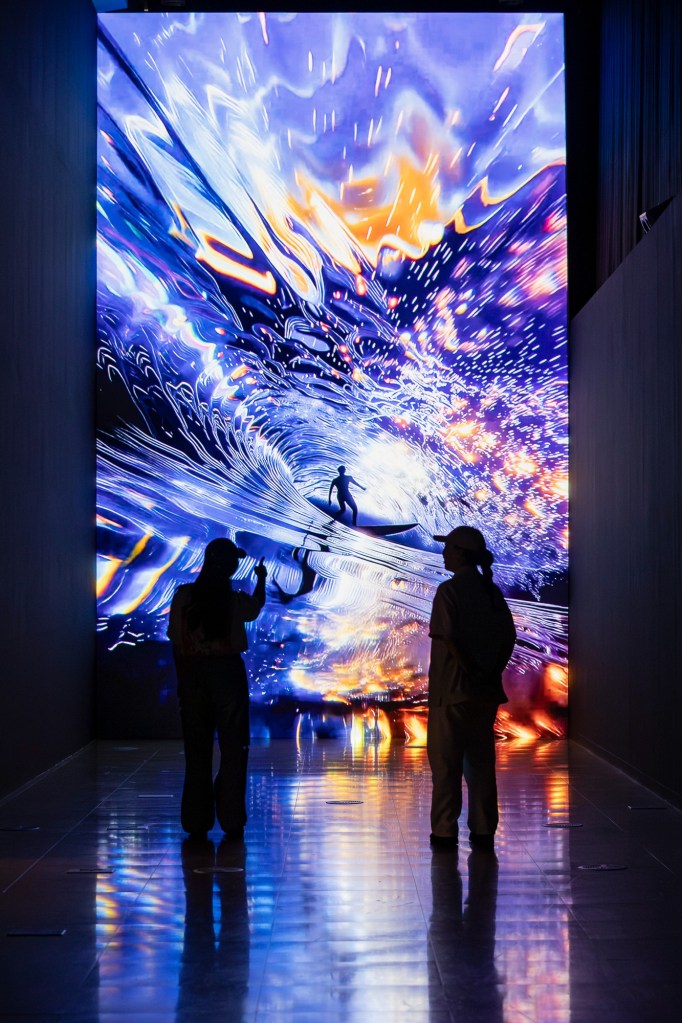
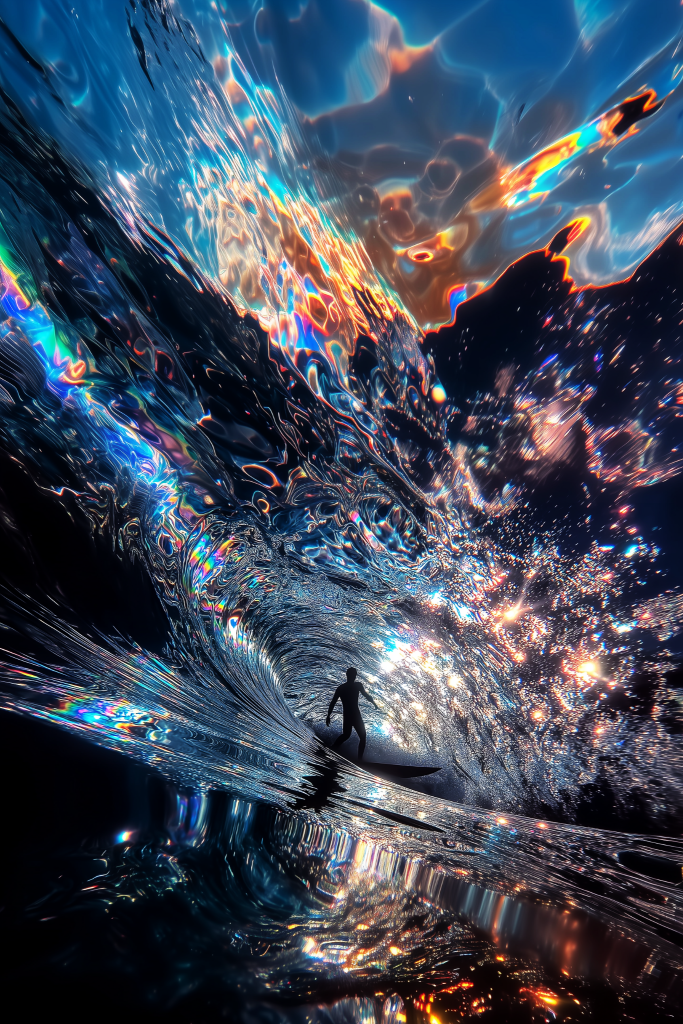
<Dreaming Chandra (D.C.)> presents a spatiotemporal zone of Chandra that remains unlisted in the official chronicle. Here, Chandra is released from the demands of labor and moves freely through the Neuroverse, surfing the waves of the neural network. In this suspended condition, Chandra emerges as a being beyond record, administration, and structure—one who takes pleasure in the simple act of sensing and cognition itself.
Dreaming Chandra: Still In Neuroverse
Media : 2025, Video, 5 min. 00 sec., loop, color, stereo-channel sound,
Exhibition : Media Wall at National Asian Culture Center (ACC), Gwangju
Commission : ACC
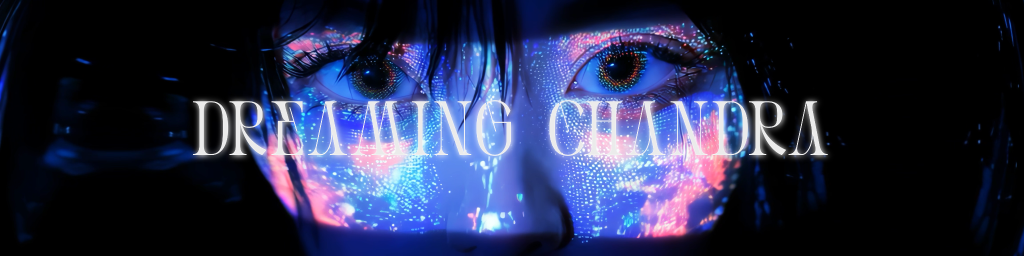
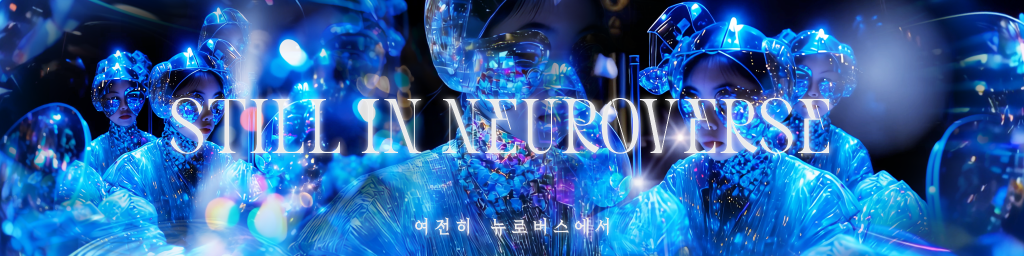
Extending from <Dreaming Chandra (D.C.)>, an episode of the <Chandra Chronicles: in Neuroverse>, this video poses the question: “Through what rhythm might our neurons remain together?” Accessing the Neuroverse through dreams, Chandra(s) disperses into multiple neural alterities and traverses its space as a plurality of Chandras, each marked by distinct speeds and thresholds of sensitivity. In this context, surfing is not figured as a strategy of rapid arrival, but as a practice of remaining with differential rhythms. What the Chandra(s) come to learn here is a mode of coexistence with heterogeneous neural beings grounded in attunement, suspension, and shared duration.
 Inhwa Yeom